WSM Casino Crypto Payments: Coins, Wallets and Onramps
 Available in GB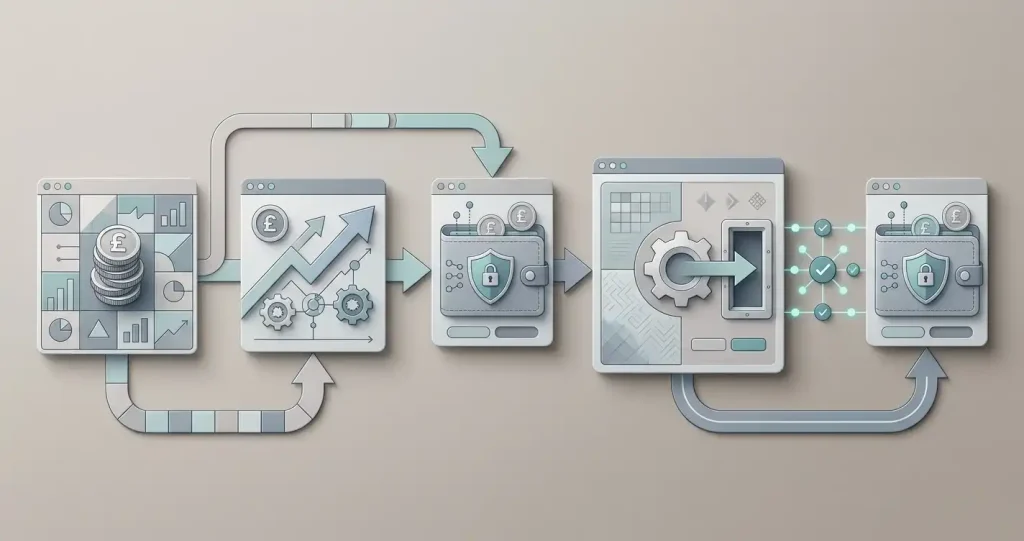
WSM Casino supports cryptocurrency deposits and withdrawals. Supported asset examples include Bitcoin (BTC), Ethereum (ETH), Tether (USDT), Litecoin (LTC), Tron (TRX), Dogecoin (DOGE), USD Coin (USDC), Cardano (ADA) and BNB. The live cashier should be used for the current asset list.
The exact networks and any integrated buy-crypto function can change independently of WSM’s broader crypto-funding model, so the live cashier should be used for the current route.
Table of Contents
- WSM supports major coins and stablecoins
- A coin name is not enough – the blockchain network must match
- Existing crypto and fiat-to-crypto onramps are two different routes
- For UK readers, GBP remains the budgeting currency even in a crypto cashier
- Wallet addresses should be treated as payment instructions, not contact details
- Blockchain confirmation time is not casino processing time
- Crypto deposits do not mean anonymous casino use
- Crypto fees have several layers
- Mobile users need to plan the handoff between browser and wallet
- A practical crypto-payment checklist
- From pounds to a WSM crypto deposit
- Using WSM's crypto cashier without confusing network and casino processing
WSM supports major coins and stablecoins
BTC, ETH, USDT, LTC, TRX, DOGE, USDC, ADA and BNB are among the supported assets.
The mix matters because the assets serve different practical purposes. Bitcoin and Ether are widely held but can move substantially in price. USDT and USDC are stablecoins designed to track the value of the US dollar, which can reduce price movement while funds are held between deposit and withdrawal. Litecoin, Tron, Dogecoin, Cardano and BNB add more network choices for readers who already use those ecosystems.
Token choice should be based on cashier compatibility and wallet/network support rather than investment preference. The practical question is whether the reader already controls a supported asset and whether the live WSM cashier supports the same network their wallet can send and receive.
A coin name is not enough – the blockchain network must match
Tokens such as USDT and USDC can exist on more than one blockchain network. The live cashier should be used to confirm the network options available for the selected asset and account.
The safe workflow is to open the WSM cashier, choose the asset first, then note the exact network shown next to the deposit address. The sending wallet or exchange must use that same network. Matching the token but selecting the wrong chain can lead to a failed credit or an unrecoverable transfer.
The same principle applies in reverse when withdrawing. The destination wallet must support the asset and the network selected in the WSM cashier. A familiar symbol does not guarantee that every address format or chain is interchangeable.
Existing crypto and fiat-to-crypto onramps are two different routes
Some WSM descriptions mention an integrated buy-crypto route, but an integrated purchase route should not be assumed to be available to every account.
If an onramp is present, it should be understood as a purchase service that converts fiat into crypto before the casino deposit completes.
If no integrated onramp is available, a UK reader may need to obtain crypto through a separate wallet or exchange and then transfer it. That creates an additional service relationship outside WSM, and its fees and verification rules are separate from the casino.
For UK readers, GBP remains the budgeting currency even in a crypto cashier
A crypto-only or crypto-first cashier can make account funding look detached from pounds, but most UK readers still budget in GBP. If a deposit is made using a volatile asset, the sterling value of the balance can change before or after any gambling takes place. That movement is separate from casino wins and losses.
A practical approach is to decide the gambling budget in pounds first, then note the approximate GBP value of the crypto when it is acquired and deposited. The user can then distinguish market movement from gambling activity. Stablecoins can reduce, but not necessarily eliminate, conversion and platform risks associated with moving between fiat and crypto.
Fixed crypto amounts should not be converted into permanent pound values because exchange rates change continuously.
Wallet addresses should be treated as payment instructions, not contact details
A casino deposit address is a technical destination. Before sending, the user should compare the address shown by WSM with the one pasted into the wallet, check the network again and review any memo or tag requirement if the selected asset uses one. Copy-and-paste reduces typing errors, but the full destination should still be checked because clipboard malware can replace addresses.
That is a general operational precaution rather than a WSM account requirement.
Private keys and seed phrases should never be entered into a casino support chat or sent to a payment recipient. A wallet connection, where offered, should not require the user to disclose the private key itself.
Blockchain confirmation time is not casino processing time
Crypto deposits and withdrawals have two different clocks. The blockchain determines when a transaction is included and confirmed on the network. The casino determines when an incoming payment is credited and, for withdrawals, when a request is approved and broadcast.
A fast blockchain therefore does not prove that every withdrawal will be fast. A payout may still be waiting for account review, KYC or operator approval before any transaction hash exists. Conversely, once WSM has sent a withdrawal, the remaining delay may come from network confirmation or the receiving service’s own crediting policy.
For WSM withdrawals, operator approval and account checks happen separately from blockchain settlement, so network speed should not be confused with a promised total withdrawal time.
Crypto deposits do not mean anonymous casino use
WSM may request identity verification, including before or during withdrawal review. Cryptocurrency therefore should not be treated as a guaranteed no-KYC route.
Exact document lists and processing times can vary, and account checks may be requested before a transaction is approved.
Crypto fees have several layers
A payment can involve a blockchain network fee, an exchange or purchase-provider fee, a currency-conversion spread and any fee imposed by the casino itself. A claim that one layer is free does not mean the whole funding route costs nothing.
For example, an integrated onramp could quote a crypto purchase price above the market midpoint while the blockchain later charges a separate transfer fee. A self-custody wallet may avoid a purchase-provider step if the user already owns the asset, but it still needs enough native network currency to pay gas where applicable.
Exact WSM withdrawal charges are intentionally not repeated here because those terms require primary confirmation. Readers should use the live cashier and current terms for the operator-specific fee layer.
Mobile users need to plan the handoff between browser and wallet
WSM supports mobile-browser access, which means a phone can be used for the casino side of the workflow. The payment experience can still involve switching between the WSM browser tab and a separate wallet or exchange app to approve a transfer.
The critical step is preserving the correct address and network during that handoff. QR codes can reduce copy errors where supported, while wallet-connect style flows may reduce manual address entry. Neither method removes the need to verify what is being approved.
On mobile, wallet and casino interfaces may be split across apps or browser tabs, so the handoff between them becomes part of the payment process.
A practical crypto-payment checklist
- Choose the asset in the live cashier. Do not rely on an old coin list.
- Match the network exactly. Token symbol alone is not enough.
- Verify the destination address. Check the pasted address before sending.
- Separate onramp fees from casino fees. Buying crypto and depositing crypto are different transactions.
- Budget in a familiar currency. Track the GBP value if that is how you manage spending.
- Plan the withdrawal route before depositing. Confirm that your destination wallet can receive the same asset and network.
- Expect possible account verification. Crypto funding does not guarantee anonymous use.
The broader WSM payment methods compares this crypto-first model with familiar Great Britain payment expectations.
From pounds to a WSM crypto deposit
A UK reader who starts with GBP may need two separate transactions: buying cryptocurrency and then sending that asset to WSM. An integrated onramp, when available, can make the first step appear inside the cashier, but the purchase service and the casino deposit are still different parts of the journey. The purchase provider may apply its own card acceptance rules, identity checks, exchange rate and fees before the blockchain transfer begins.
Asset choice and network choice must be handled together. BTC, ETH, USDT, LTC, TRX, DOGE, USDC, ADA and BNB are among the assets associated with WSM, while some tokens can travel over more than one network. The deposit address provided by the casino should match both the selected asset and the selected chain. Copying an address from an earlier transaction or assuming that the same symbol always uses the same network can create an avoidable payment error.
Stablecoins such as USDT or USDC can reduce the price movement that comes with holding a more volatile asset between purchase and deposit, but they do not remove network considerations. The user still needs a compatible wallet, the correct chain and enough of the relevant token or native network asset to pay any required transaction fee. Exchange-hosted and self-custody wallets can also behave differently when gambling-related transfers are involved.
The same principles apply in reverse to withdrawals. Casino approval and any KYC request happen before the blockchain stage, and the network cannot confirm a transaction that has not yet been broadcast. Once a transaction hash exists, the user can follow the transfer on the relevant chain; before that point, the withdrawal may still be inside the operator process. A short network confirmation time should therefore never be treated as a guaranteed total cashout time.
Crypto also changes record-keeping. A wallet address, transaction hash, asset amount and network are more useful for tracing a blockchain transfer than a bank statement alone. Keeping those details can help distinguish a wrong-network issue from an operator delay or an exchange problem. Because transfers are difficult to reverse, confirming the destination and amount before sending is more important than relying on a later correction.
Before sending funds, the receiving address and network need to match the instructions shown for that account. This is particularly important with assets such as stablecoins that can exist on several chains. A small test transfer can reduce the amount exposed to an address or network mistake, although it also creates an additional network fee.
Using WSM’s crypto cashier without confusing network and casino processing
WSM supports deposits and withdrawals in major assets including BTC, ETH, USDT, LTC, TRX, DOGE, USDC, ADA and BNB. The exact asset and network menu can change, so the live cashier should be used for current options.
UK account acceptance should not be assumed for every reader.
For the full product context, return to the WSM Casino review. For cashout-specific conditions, use WSM withdrawals, and for phone-based wallet workflows see the WSM mobile.